
A Complete Guide for Businesses
Distribution in logistics is the process of moving finished goods from a manufacturer to the end customer through storage, transport, and delivery channels.
The journey of a product from a manufacturing floor to a customer’s hands is paved with complex, interconnected processes, but none are more critical than logistics distribution. Whether you operate as a large-scale manufacturer, a bustling retail outlet, or a demanding HoReCa business, the underlying efficiency of your distribution network will directly influence your overall profitability, customer satisfaction levels, and your ability to maintain a competitive advantage in a crowded market.
This comprehensive guide aims to thoroughly answer a fundamental industry question: what exactly is distribution in logistics? We will delve into its core components, explore the various strategic models available, and demonstrate how partnering with a reliable, established distributor such as D&D Distribution in Albania can completely transform and elevate your supply chain operations.
The Full Definition of Logistics Distribution
At its core, distribution in logistics refers to the highly systematic and strategic process of moving physical goods from their initial point of production or storage directly to the end consumer or corporate client. It functions as a critical, highly specialized subset of broader supply chain management, effectively bridging the inevitable gap between where items are produced and where they are ultimately consumed. While logistics is the overarching discipline of planning and managing the entire flow of goods, information, and resources, distribution represents the specific, downstream, customer-facing function focused purely on physical delivery.
According to insights from the Council of Supply Chain Management Professionals (CSCMP), this logistical distribution phase accounts for approximately 10% to 15% of a product’s total cost, establishing it as one of the most significant and consequential operational expenses for businesses operating worldwide. The process itself is multifaceted, covering everything from the initial receiving and warehousing of goods from suppliers, to rigorous inventory management and stock control. It also seamlessly integrates order picking and fulfillment, complex transportation routing, dedicated customer service, and the meticulous processing of reverse logistics and returns.
Exploring the Main Types of Distribution Models
Businesses can adopt several distinct distribution models, each offering unique strategic advantages depending on the specific product type, the target market dynamics, and the established customer base. Direct distribution, for instance, occurs when a manufacturer sells and delivers products completely independent of intermediaries, a model that has become highly prevalent in modern e-commerce and direct-to-consumer (D2C) ecosystems. While this approach yields higher profit margins, faster feedback loops, and fosters a direct relationship with the buyer, it also imposes high internal logistics costs and requires substantial proprietary delivery infrastructure. Choosing the right model is the first strategic decision in distribution in logistics.
Conversely, indirect distribution relies on one or more intermediaries, such as retail networks or specialized wholesalers, to bridge the gap between the creator and the consumer. This remains the dominant and most practical model within the fast-moving consumer goods (FMCG) sector, offering massive market reach while lowering the operational burden on the original manufacturers, albeit at the cost of slightly reduced margins and less control over the final customer experience.
Within this indirect framework, wholesale distribution plays a pivotal role. Wholesale distributors purchase enormous quantities of goods directly from manufacturers, subsequently reselling and distributing them to local retailers or HoReCa establishments. Industry leaders like D&D Distribution exemplify this model, utilizing their vast economies of scale, specialized logistics infrastructure, and established client networks to make global products seamlessly accessible to regional markets. Finally, the third-party logistics (3PL) model allows brands to outsource warehousing, fulfillment, and transportation entirely to specialized providers, a sector that was valued at over $1.3 trillion globally in 2024.
The Core Components Driving Distribution Operations
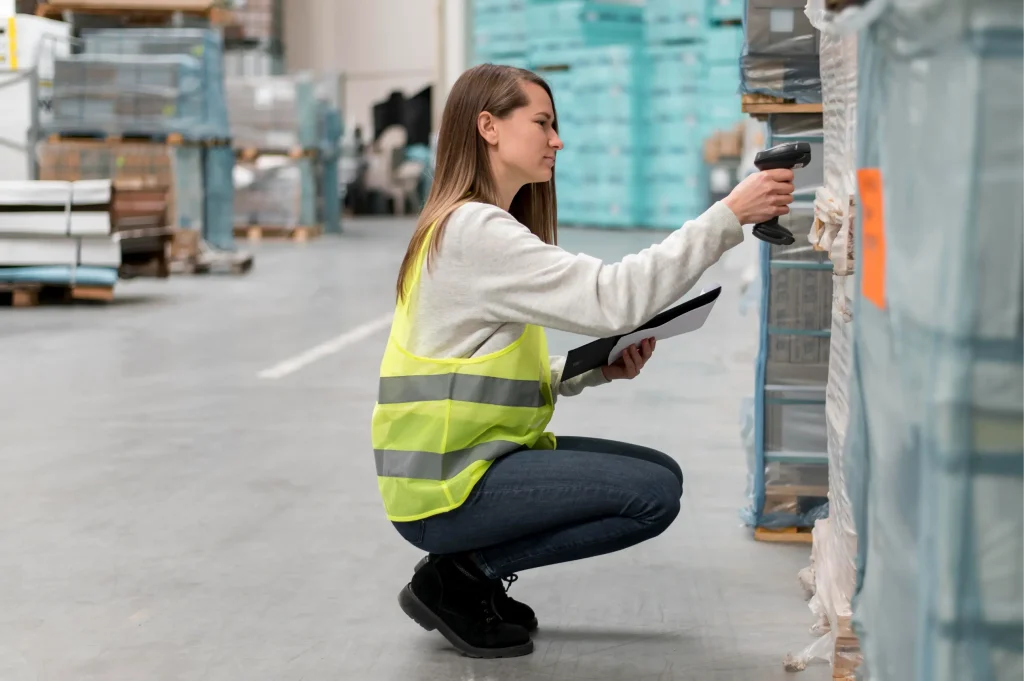
Building a high-performing distribution network requires mastering several deeply interconnected operational components. It begins with advanced warehousing, which provides the necessary physical infrastructure and climate-controlled environments to safely store inventory before dispatch, ultimately reducing lead times and allowing businesses to respond nimbly to fluctuating market demands. This is closely tied to precision inventory management, a practice that utilizes demand forecasting and just-in-time (JIT) principles to ensure the exact right quantity of stock is always available, thereby preventing both capital-draining overstock and frustrating stockouts. Each of these components has to work together for distribution in logistics to stay fast and affordable.
Once an order is placed, the labor-intensive process of order fulfillment takes over, encompassing the picking, packing, and dispatch operations that directly dictate delivery speed and accuracy for high-volume corporate clients. Following fulfillment, transportation and delivery mechanics represent the most substantial financial investment, often accounting for 50% to 65% of total logistics expenditures according to McKinsey. A reliable fleet and highly optimized routing are absolutely mandatory here to control these massive costs and ensure timely arrivals.
The most complex and costly phase of this transportation journey is last-mile delivery, representing the final transit from a local distribution hub to the consumer’s location. This stage alone can consume up to 53% of total shipping budgets, making its optimization a top priority for distributors serving dense urban environments. Finally, modern operations must also account for reverse logistics, creating an efficient returns process that not only protects the brand’s reputation but actively inspects and reintegrates sellable stock back into the active inventory pool. This last mile is where distribution in logistics most visibly affects the customer experience.
Strategic Importance and the Albanian Market Context
Treating distribution merely as a back-office necessity is a fundamental mistake; it is a profound strategic differentiator. Exceptional distribution capabilities directly foster customer satisfaction, which is critical considering that 84% of consumers will abandon a brand entirely following a single poor delivery experience. Furthermore, an optimized network drastically reduces excess waste and transportation costs, expanding profit margins while empowering businesses to penetrate new geographic markets without having to build costly local infrastructure from scratch. This operational consistency ultimately reinforces brand integrity, a factor of paramount importance in the premium food and beverage sectors where the physical condition of a product upon arrival is non-negotiable.
Looking specifically at the Albanian logistics landscape, the market has experienced remarkable modernization driven by growing consumer demand, foreign investment, and vital improvements to the Trans-European Transport Network (TEN-T). This has created a vibrant environment characterized by a growing modern retail sector and an expanding HoReCa industry fueled by domestic tourism, leading to a surging demand for premium imported food and beverage products. Navigating this fragmented distribution landscape requires an experienced local partner with a definitive competitive advantage. For companies entering this market, understanding distribution in logistics locally is essential.
D&D Distribution has been an authoritative presence in Albania since 1995, meticulously building a premium network that currently spans over 6,000 wholesale clients. Supported by a dedicated fleet of more than 150 vehicles and a robust team of over 50 sales agents, D&D offers end-to-end inventory management, professional fulfillment with the capacity for thousands of daily orders, and seamless nationwide delivery. With an impressive portfolio featuring global heavyweights like Divella, Budweiser Budvar, and Granarolo, and a commitment to utilizing 100% recyclable or biodegradable packaging at no extra cost, they provide the exact infrastructure and brand support required to thrive in this rapidly evolving region.
Ultimately, distribution in logistics is the essential nervous system connecting high-quality products to eager customers by uniting warehousing, fulfillment, transportation, and returns into one seamless operation. By understanding the intricacies of various distribution models and optimizing these core components, brands can achieve rapid, cost-effective market penetration without the burden of building bespoke logistics infrastructure. For those eyeing the significant opportunities within the Albanian market, securing a strategic alliance with a deeply experienced partner like D&D Distribution ensures that your products and your business growth are delivered reliably and professionally.
Frequently Asked Questions
What is distribution in logistics?
Distribution in logistics is the set of processes that move finished goods from the manufacturer to the end customer, including warehousing, order processing, transportation, and delivery.
What are the main types of distribution models?
The main models are direct distribution, where the producer sells to customers itself, and indirect distribution, where wholesalers, distributors, or retailers handle the sale.
What are the core components of distribution operations?
The core components are warehousing and inventory management, order fulfillment, transportation, and last-mile delivery.
Why does distribution matter for businesses in Albania?
A reliable distribution partner helps manufacturers and retailers reach buyers across Albania with proper storage, transport, and delivery, which protects margins and customer satisfaction.